Daisuke Saito, Takumi Kobara, and Hironori Washizaki, “Development of a Rubric for Assessing AI Education for K–12 Students,” Journal of Robotics and Mechatronics, Vol.39 No.1, pp. 1-23, 2027. (ESCI, IF=1.0)
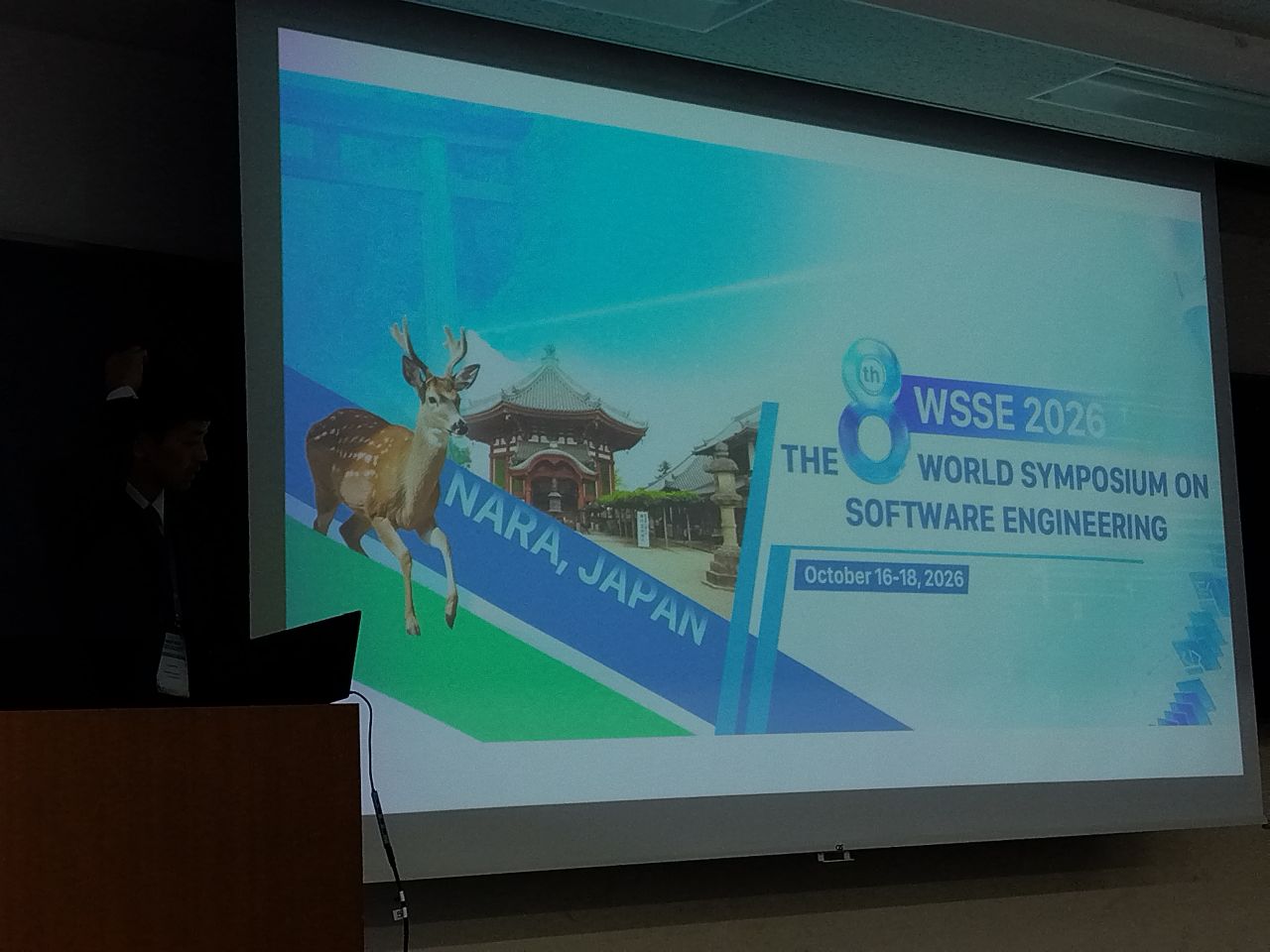
Prof. Washizaki was an honor to deliver his keynote at WSSE 2026
8th World Symposium on Software Engineering (WSSE 2026) is taking place at the beautiful campus of the Nara Women’s University in Nara, Japan. Prof. Washizaki was an honor to deliver his keynote on the SWEBOK Guide and AI-empowered software engineering.
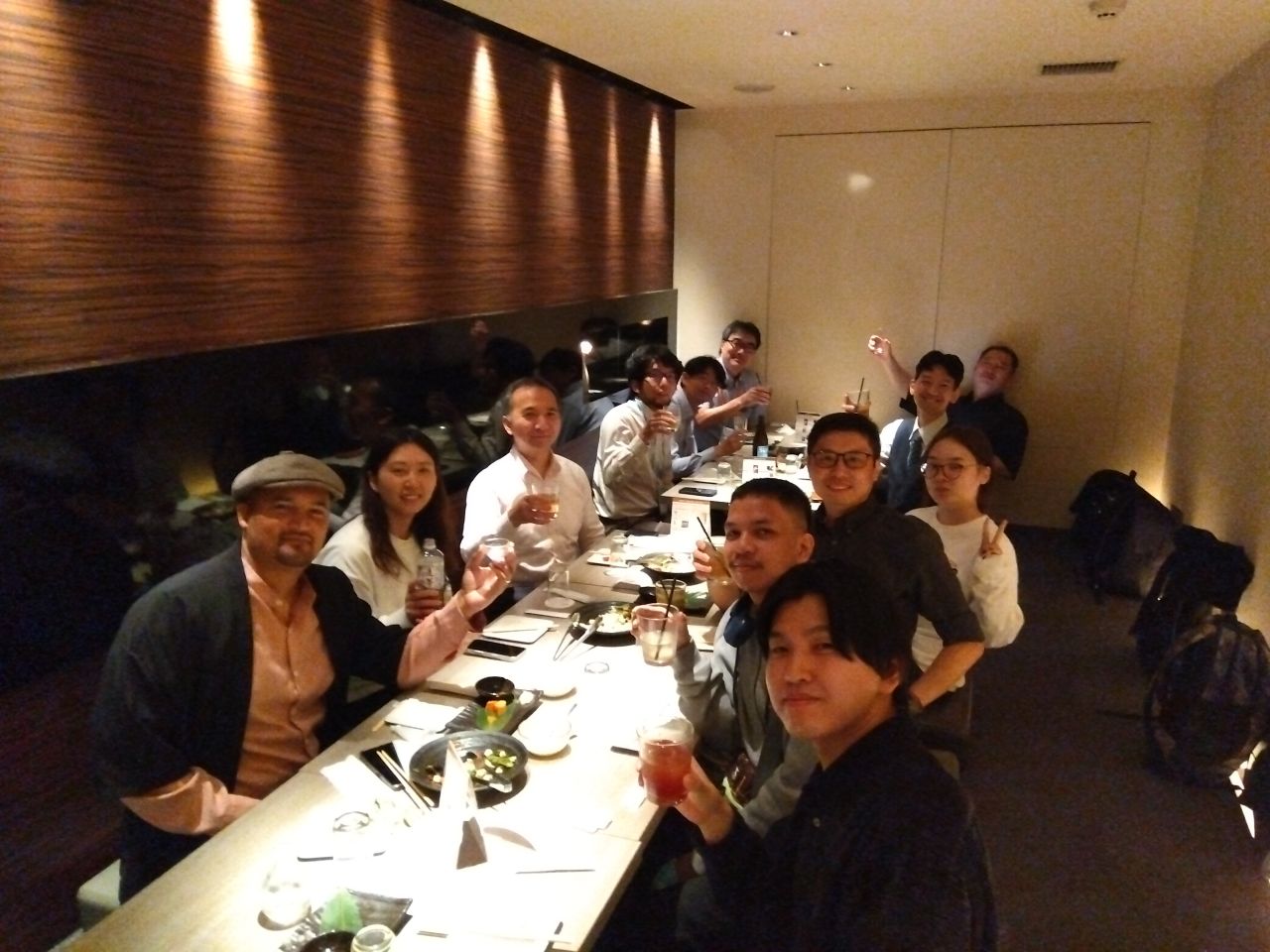
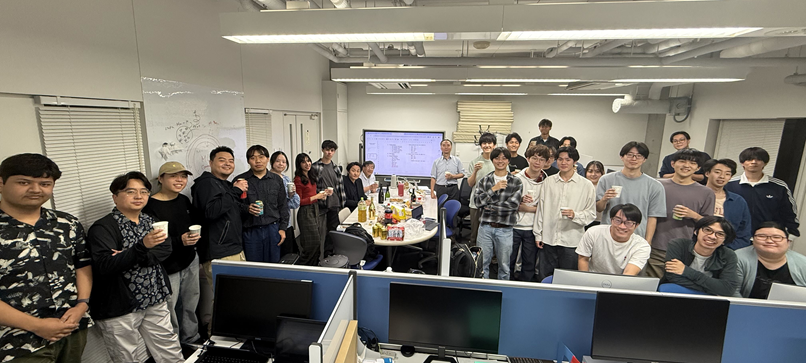
Our lab held a farewell for Research Fellow Tina Masoudi, and welcomed new project research students
Our lab held a farewell for Research Fellow Tina Masoudi, who stayed for a while in our lab from the University of Saskatchewan, and welcomed new project research students. Keep in touch, and let’s expand our collaboration.
参加募集 AI&量子ソフトウェアにおけるダイバーシティ 東京セミナー 2026
AIや量子コンピューティングにおけるダイバーシティの扱いや、量子&AIを通じた多様性・包摂性の考慮の高度化の分野を国際的にリードする著名な方々をお招きして、無料セミナーを11月6日(金)に渋谷にて開催します。ぜひご参加ください! 途中入退場OKです。
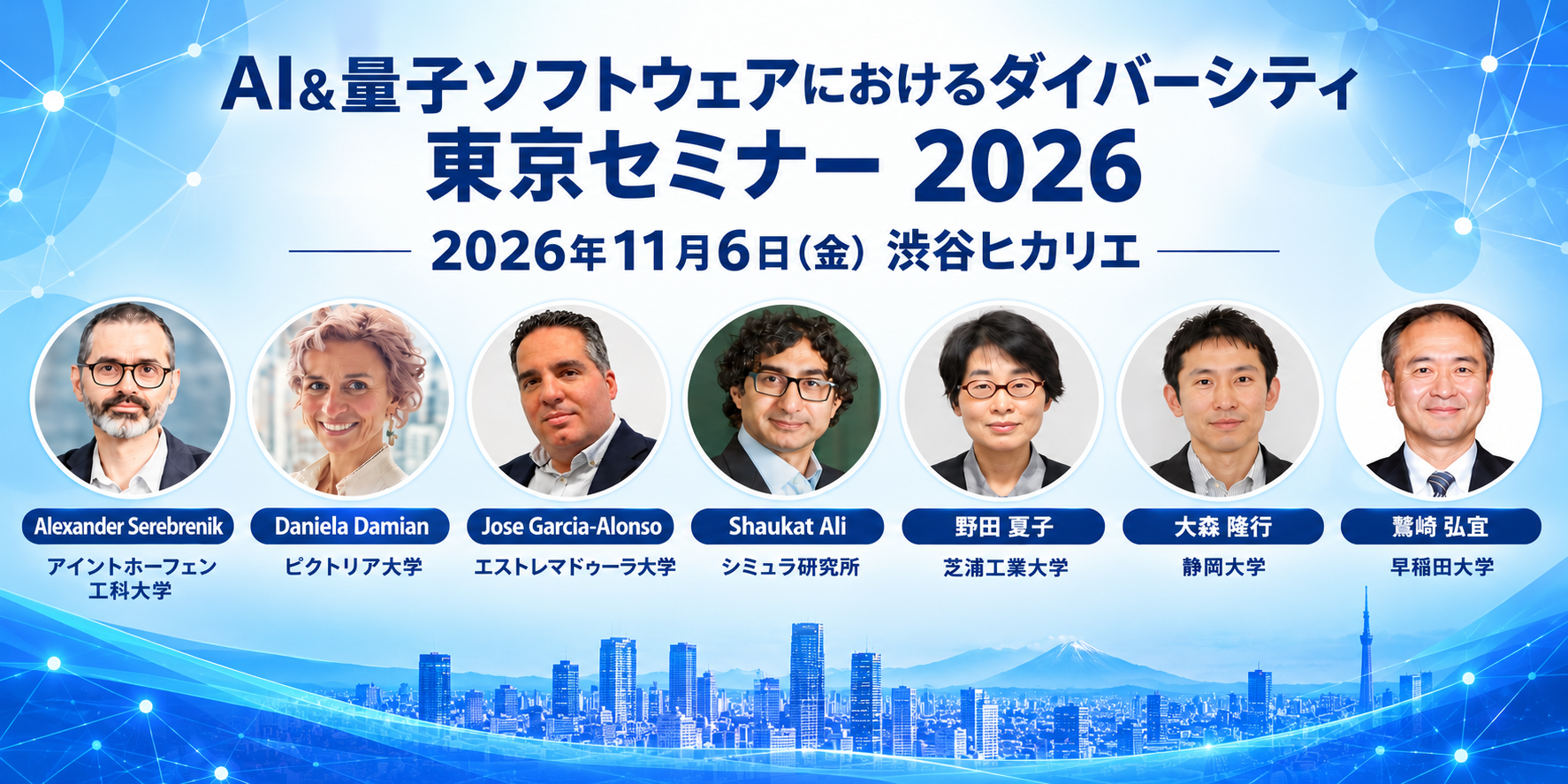
AI&量子ソフトウェアにおけるダイバーシティ 東京セミナー 2026
2026年11月6日(金) 15:15-18:00 渋谷ヒカリエ
https://smartse.connpass.com/event/409546/
AIや量子コンピューティングが社会を大きく変える時代において、ダイバーシティ&インクルージョン(D&I:多様性と包摂性)の視点は、誰もが技術の恩恵を受けられる公平で持続可能な社会を実現するために、ますます重要になっています。また、AIや量子コンピューティングは、デジタルサービスにおける多様性と包摂性を促進し、より多くの人々が利用しやすいサービスの実現に貢献する可能性を持っています。
そこで、AIや量子コンピューティングにおけるD&Iの扱いや、量子&AIを通じた多様性・包摂性の考慮の高度化の分野をリードする以下の方々をお招きして、無料セミナーを開催します。トピックとしては、ソフトウェアエンジニアリングおよびAIと人間の側面ならびにダイバーシティとの関わりや、日本や様々な地域におけるダイバーシティおよび量子ソフトウェアの研究などを予定しています。
本セミナーは、AI&量子とダイバーシティ分野における日本および地域を超えた産学連携の拡大と深化を目的とし、「AIおよび量子コンピューティング時代のD&I」湘南会議参加の国際的に著名な方々他を講演者にお迎えして開催します。講演者との意見交換や交流、参加者他とのネットワーキングの機会としてもお気軽にぜひご利用ください。部分的な参加も歓迎します。講演は英語ですが、質疑は日英のいずれも構いません。
* Alexander Serebrenik (アイントホーフェン工科大学): 社会ソフトウェア工学
* Daniela Damian (ビクトリア大学): AI&ソフトウェアにおける多様性、共感、STEM教育
* Jose Garcia-Alonso (エストレマドゥーラ大学): 量子ソフトウェア工学
* Shaukat Ali (シミュラ研究所): 量子・AIソフトウェア工学
* 野田 夏子 (芝浦工業大学) : 情報処理学会ソフトウェア工学研究会ダイバーシティWGチェア
* 大森 隆行 (静岡大学): ソフトウェア設計、保守
* 鷲崎 弘宜 (早稲田大学ほか): AIソフトウェア工学
共催・協賛
* スマートエスイー ( https://www.waseda.jp/inst/smartse/ )
* 早稲田大学グローバルソフトウェアエンジニアリング研究所
* 情報処理学会ソフトウェア工学研究会ダイバーシティWG
概要
* 日時: 2026年11月6日(金) 15:15-18:00(開場 15:05予定)
* 場所: 渋谷ヒカリエ 11階 会議室 ( https://www.hikarie.jp/access/ )
* 参加申込: connpassページからお申し込みください
https://smartse.connpass.com/event/409546/
* 参加費: 無料
15:15 – 15:20 オープニング
15:20 – 16:20 「ソフトウェア工学&AIにおける人間の側面」
Agentic and Generative AI for Requirements Engineering and Diversity (エージェンティック&AIによる要求工学とダイバーシティ)
鷲崎 弘宜 (早稲田大学)
D&I, human aspects of SE (TBD) (ソフトウェア工学におけるダイバーシティ&インクルージョンと人間の側面)
Alexander Serebrenik (アイントホーフェン工科大学)
Human connection: why empathy is needed even more in the age of AI (人のつながり: なぜAIの時代に “共感” がもとめられているのか?)
Daniela Damian (ビクトリア大学)
16:20 – 16:30 休憩
16:30 – 17:50 「地域と多様性および量子ソフトウェア」
(Invited talk from IPSJ SIG-SE Diversity Working Group) (IPSJソフトウェア工学研究会ダイバーシティWGからの招待講演)
野田夏子 (芝浦工業大学)
Exploring How to Integrate Diversity and Inclusion into Software Engineering Research (ソフトウェア工学の研究にダイバーシティとインクルージョンをどのように組み込むかを探る)
大森 隆行 (静岡大学)
Quantum Software research: Opportunities for Latin America and the Global South (ラテンアメリカおよびグローバルサウスにおける量子ソフトウェア研究)
Jose Garcia-Alonso (University of Extremadura)
(TBD)
Shaukat Ali (シミュラ研究所)
17:50 – 18:00 議論&ネットワーキング
Prof. Washizaki is honored to deliver remarks and a keynote celebrating both the AICSSYC 2026 and the IEEE Computer Society’s 80th anniversary
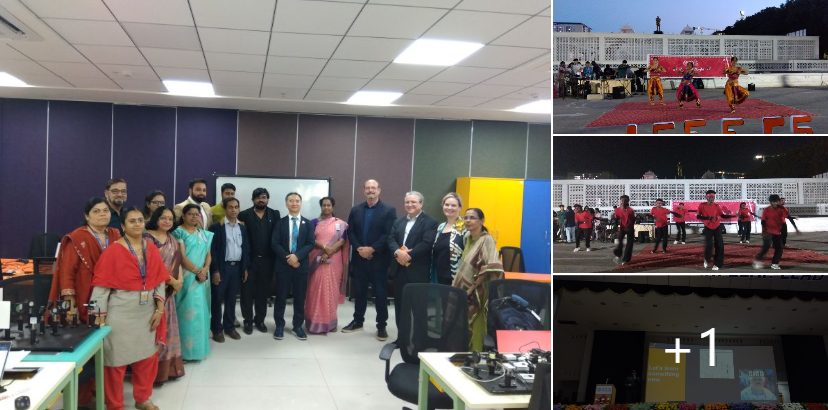
AICSSYC 2026, the All India Computer Society Students & Young Professionals Congress, is being hosted by SRM Institute of Science and Technology (SRMIST), Chennai. As India’s flagship SYP congress, it is sponsored by IEEE Computer Society SYP Sections/Chapters in India, MGA/SYP, and event partners Eqvento and Interview Buddy. Prof. Washizaki is honored to deliver remarks and a keynote celebrating both this congress and the IEEE Computer Society’s 80th anniversary.
Prof. Washizaki extends his heartfelt gratitude to all voters, the wider community, friends, and well-wishers for your trust, encouragement, and unwavering support during his candidacy for IEEE Division V Director-Elect.
Prof. Washizaki extends his heartfelt gratitude to all voters, the wider community, friends, and well-wishers for your trust, encouragement, and unwavering support during his candidacy for IEEE Division V Director-Elect at the IEEE annual election. Though elections bring different outcomes, his commitment to service and to our community remains steadfast. Thank you all for being a valued part of this journey.
Prof. Steve Matsumoto from the Olin College of Engineering visited our lab
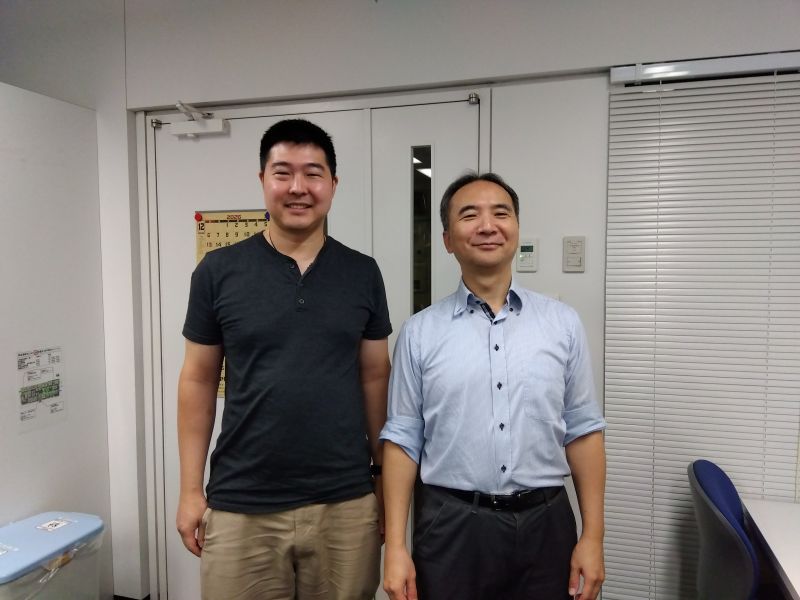
Prof. Steve Matsumoto from the Olin College of Engineering visited our lab. Thank you for coming, and let’s expand our collaboration!
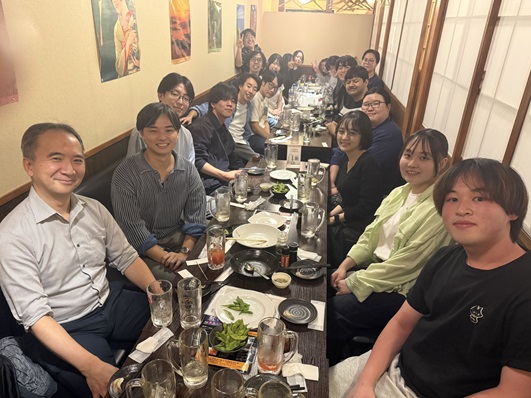
We are excited to welcome our new research project students and exchange students
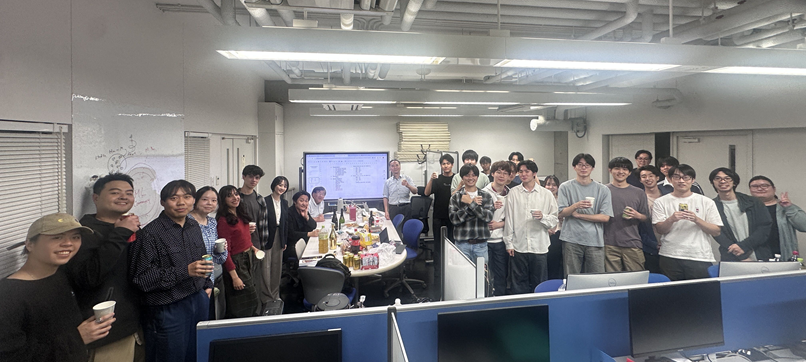
We are excited to welcome our new research project students and exchange students. Welcome!
ソフトウェアエンジニアリングシンポジウム SES2026にて論文「AIエージェント駆動パイプラインによるTemplate Method逸脱パターンの探索的採掘と構造化」研究奨励賞
ソフトウェアエンジニアリングシンポジウム SES2026 では、ペルソナ概念の変容の論文に加えて論文『AIエージェント駆動パイプラインによるTemplate Method逸脱パターンの探索的採掘と構造化』(鹿糠 秀行,三部 良太(日立製作所),鷲崎 弘宜 (早稲田大学))について研究奨励賞を受賞しました。
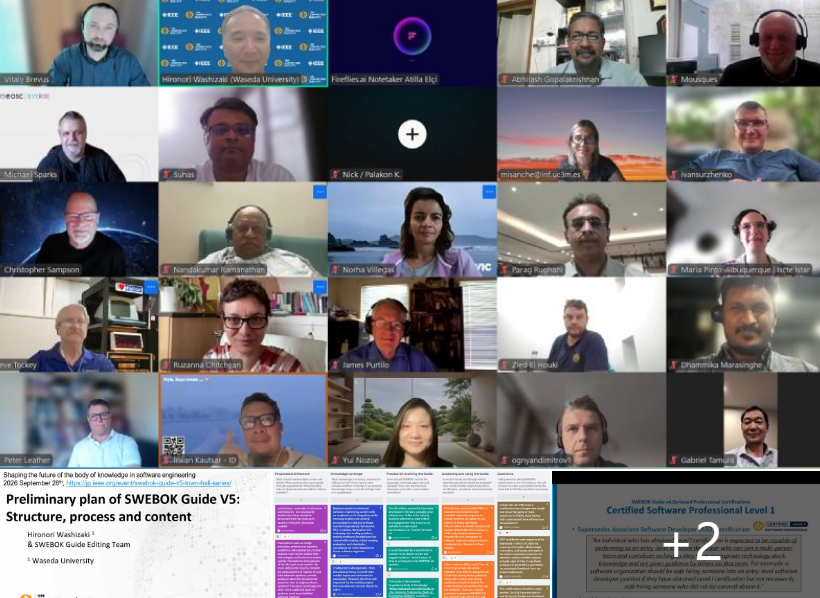
The SWEBOK Team (led by Prof. Washizaki) hosted the inaugural Town Hall meeting for the IEEE Computer Society’s SWEBOK Guide V5 initiative in partnership with the IEEE Japan Office
The SWEBOK Team (led by Prof. Washizaki) hosted the inaugural Town Hall meeting for the IEEE Computer Society’s SWEBOK Guide V5 initiative in partnership with the IEEE Japan Office. More than 140 participants joined us live, resulting in lively and inspiring discussions. Thank you all for your participation. Your engagement, suggestions, and feedback are truly appreciated – they are vital as we work together to shape the future of the Software Engineering Body of Knowledge. If you were unable to attend, the introductory slide deck for the V5 plan is available here. https://jp.ieee.org/wp-content/uploads/SWEBOK-Townhall-Slides-20260928.pdf
We will also share the event recording soon, allowing you to watch and contribute your insights at your convenience. Our team will be circulating a questionnaire to gather additional feedback, as community input is essential to this process. We look forward to continuing this Town Hall series, so please stay tuned!